Introduction
Hey there, fellow developers! Buckle up because we’re about to dive into the crazy world of REST API architecture. Prepare to decode the mysterious differences between REST API and RESTful API. In this comprehensive guide, we’ll make sense of REST’s principles and shed some light on RESTful APIs. Let’s go on this wild ride together!
What is the Difference Between REST API and RESTful API?
Alright, so picture this: REST API and RESTful API walk into a bar. They look similar, talk the same language, but boy, do they have different personalities! REST API is the general term for any API that follows REST’s principles. On the other hand, RESTful API is like the rule-abiding citizen who strictly adheres to REST’s constraints. They’re like twins, but one’s the rebel and the other is the goody-two-shoes.
Why is REST API Called RESTful API?
You might be wondering why REST API is called RESTful API. Well, think of it like this: RESTful API is the API version of your friend who follows all the rules. They’re super diligent and always on their best behavior. RESTful APIs strictly follow REST’s principles, making them scalable, reliable, and the life of the party when it comes to interoperability between different systems.
What is REST and Explaining RESTful APIs?
-
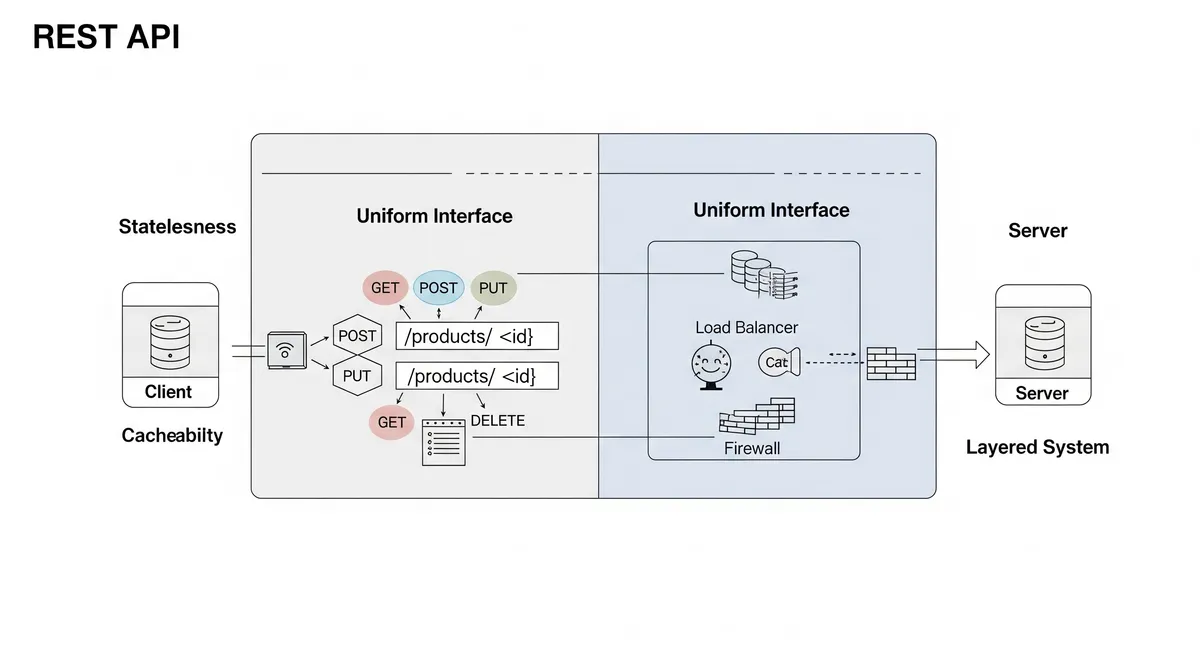
Statelessness: RESTful APIs are like Zen masters they’re completely stateless. Each client request carries all the necessary information for the server to understand and process it. No need for the server to store session-specific data. It’s all about being scalable and reliable, baby!
-
Uniform Interface: RESTful APIs follow a uniform interface, like your favorite superhero with a standard set of moves. They use HTTP methods like GET, POST, PUT, and DELETE to interact with resources. And don’t forget those unique URIs (Uniform Resource Identifiers) for identifying resources. It’s like their secret handshake!
-
Client-Server Architecture: REST separates the client from the server, just like separating your boss from your office shenanigans. The client takes care of the user interface and experience, while the server handles the heavy lifting of data storage and processing. It’s teamwork at its finest!
-
Cacheability: RESTful APIs love to party with HTTP caching mechanisms. By specifying cache-related headers, they make responses cacheable, boosting performance, and lightening the server’s load. It’s like giving everyone a chance to catch their breath between dances!
-
Layered System: REST is all about being versatile, just like those fancy layered cakes. It allows multiple layers, like load balancers and firewalls, to exist between the client and the server. This layered architecture brings scalability, security, and flexibility to the party!
Examples of REST API and RESTful APIs
Let’s spice things up with some examples! Imagine we’re running an e-commerce application. Here are two scenarios of retrieving product information:
REST API Example:
- Endpoint:
GET /products - Description: Picture this: you want all the products, and you want them now! This endpoint retrieves a list of all the products you desire.
- Response: Get ready for a JSON array containing those fabulous product objects!
RESTful API Example:
- Endpoint:
GET /products/{id} - Description: So, you have your eyes set on a specific product, huh? No worries! Just provide the product ID, and voila! This endpoint retrieves the specific product you’re drooling over.
- Response: Brace yourself for that beautiful JSON object representing your dream product.
Both examples follow REST’s principles by using the proper HTTP method (GET) and providing the necessary resource identifiers (URL paths). It’s like having a backstage pass to the API concert!
Difference Between Web API and RESTful Services
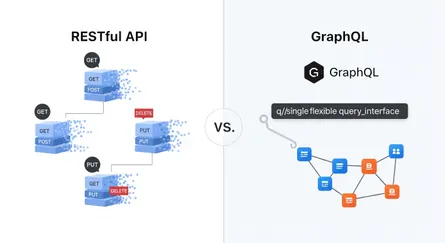
Now, let’s talk about the cool kids on the block: web APIs and RESTful services. Web API is the umbrella term for any interface that lets different software systems party together over the web. It’s a wild world out there with various architectural styles, including RESTful services. While RESTful services strictly follow REST’s principles, not all web APIs do. Some prefer other technologies like SOAP, XML-RPC, or even GraphQL. It’s like a never-ending battle of the APIs!
Conclusion
Congratulations, fellow developers! You’ve successfully decoded the secrets of REST API architecture. Understanding the differences between REST API and RESTful API is like knowing which party is wild and which is a bit more tamed. By embracing REST’s principles, you can build scalable, future-proof applications that rock the stage of efficient communication between systems.
If you’re hungry for more API knowledge, check out our blog post on RESTful API vs. GraphQL: Which API is the Right Choice for Your Project?. It’s like a backstage pass to another epic API showdown!
References
- Fielding, Roy T. “Architectural Styles and the Design of Network-based Software Architectures.” Doctoral dissertation, University of California, Irvine, 2000. (The origin of REST.), https://www.ics.uci.edu/~fielding/pubs/dissertation/rest_arch_style.htm
- “What is REST?” - REST API Tutorial.), https://restfulapi.net/
- “Understanding RESTful APIs” - Smashing Magazine.), https://www.smashingmagazine.com/2018/01/understanding-restful-apis/
- “REST API Design Rulebook” - Mark Masse. O’Reilly Media.), [Link to a reputable source for the book or summary]
- “HTTP Methods for RESTful Services” - REST API Tutorial.), https://restfulapi.net/http-methods/
- “Statelessness in REST APIs” - GeeksforGeeks.), https://www.geeksforgeeks.org/statelessness-in-rest-apis/
- “Uniform Interface Constraint in REST” - REST API Tutorial.), https://restfulapi.net/uniform-interface/
- “Client-Server Architecture” - MDN Web Docs.), https://developer.mozilla.org/en-US/docs/Web/HTTP/Overview#client-server_architecture
- “HTTP Caching” - MDN Web Docs.), https://developer.mozilla.org/en-US/docs/Web/HTTP/Caching
- “Layered System Constraint in REST” - REST API Tutorial.), https://restfulapi.net/layered-system/
- “What is a Web API?” - MuleSoft.), https://www.mulesoft.com/resources/api/what-is-a-web-api
- “API Design Best Practices” - Swagger/OpenAPI.), https://swagger.io/resources/articles/best-practices-in-api-design/
- “Richardson Maturity Model” (Steps toward the glory of REST.), https://martinfowler.com/articles/richardsonMaturityModel.html